

Hands-On Lash Training That Prepares You for Real Clients
- Jan 20
- 6 min read
If there’s one thing everyone agrees on in the beauty industry, it’s this: real confidence comes from doing, not just studying. You can read about lash mapping techniques, adhesive control, or client consultations all day — but none of that fully prepares you for the moment you sit down with a real client whose eyes, comfort, and outcome are now in your hands.
That’s why hands-on training has become a non-negotiable for aspiring lash artists. It’s the difference between knowing about lashes and knowing how to apply with precision. The difference between practicing on a mannequin and working on a person with blinking, tearing, unique lash lines, and actual expectations. The difference between being certified and being confident.
In this blog, we’ll dive into why hands-on training matters so much, how it transforms your technical skills and mindset, and how professional lash academies bridge the gap between theory and real-world application.
Why Textbook Knowledge Isn’t Enough
Textbooks and online modules have their place. They introduce you to terminology, general procedures, lash styles, hygiene standards, and the science behind adhesives and natural lash anatomy. That foundation matters. But if you’ve ever taken a beauty course before, you know there’s a point where studying stops helping.
Here’s why classroom-only learning falls short:
1. Real Lash Lines Aren’t Perfect or Symmetrical
Mannequins are uniform and predictable. Real clients aren’t. You’ll encounter:
Sparse lashes
Curled or crisscrossed lashes
Downward-facing lashes
Different lash cycles on each eye
Theory can’t fully prepare you for these differences — only hands-on work can.
2. Clients Move, Blink, and Have Preferences
Real people blink more when they're nervous. Some tear from irritation or brightness. Some come in tired after work and fall asleep. Some have requests like:
“Shorter than last time”
“Make it lighter this time”
“Can it look more natural?”
Textbook chapters don’t teach you how to handle a personality or preference. Hands-on practice does.
3. Application Speed Comes From Muscle Memory
You don’t build speed from diagrams — you build it from repetition. Working on real people develops:
Isolated tweezer control
Lash-to-lash placement
Lash mapping accuracy
Adhesive pickup and usage
Eye-to-hand coordination
Every time you do a full set, your workflow improves. You learn how to adjust angles, hand pressure, and posture to avoid fatigue and errors.
The Real Value of Hands-On Lash Training

When training includes real clients, models, or supervised application, something important happens — students start to make decisions on their own. They troubleshoot. They ask better questions. They learn practical adjustments no book talks about.
Here’s what separates hands-on lash training from just reading or watching videos:
1. You Learn How to Isolate Properly
Isolation seems simple until you’re actually doing it. Real lashes move. They stick together. They hide. Some are too tiny to grab easily.
Hands-on training teaches you:
How to separate baby lashes
How to angle tweezers without poking the eye
How to avoid “stickies”
How to isolate faster without losing precision
Isolation alone separates beginners from confident artists — and you only master it in real-life practice.
2. You Understand Client Eye Shapes and Styling
Eye shapes change everything. A cat eye on the wrong client can drag the eyes down. Doll style can make wide-set eyes look wider. Hands-on training teaches you how to work with:
Hooded eyes
Almond eyes
Round or wide-set eyes
Monolids
Downturned eyes
You learn how to map styles based on real anatomy and symmetry — not textbook diagrams.
3. You Gain Experience With Real Adhesive Behavior
Adhesive behaves differently depending on:
Humidity levels
Temperature
Visor or lamp heat
Lash texture
Lash cleanliness
During hands-on sessions, students learn how to adjust their adhesive pickup, dot size, and dip angle — skills you can’t learn on paper.
4. You Build Professional Client Etiquette
Being a lash artist is part technical skill, part service. Hands-on training teaches you how to:
Greet clients professionally
Conduct a proper consultation
Set expectations and explain aftercare
Handle questions and concerns
Stay calm under pressure
Communicate confidently
These soft skills matter. A client who feels comfortable is more likely to return and send referrals.
5. You Practice Correct Sanitation and Safety
Safety isn’t optional — it’s the backbone of beauty work. During hands-on training, you don’t just read about hygiene, you practice it:
Cleaning lash beds between sessions
Sanitizing tools properly
Handling glue safely
Assessing allergies and sensitivities
Applying eyepatches correctly
Working in a sterile environment
A clean, safe lash artist is a professional lash artist.
6. You Discover Common Lash Problems — and How to Fix Them
Hands-on courses introduce you to real-world issues like:
Lash clumping
Poor retention
Twisted extensions
Irritation or redness
Inner corner difficulty
Lash direction inconsistencies
And more importantly — how to fix them.
This ability to troubleshoot builds true confidence. When a client returns asking for changes or adjustments, you’ll know what to do.
7. You Build a Real Portfolio Before You Graduate
In the beauty world, photos matter.
Hands-on training gives you photos of real work — not mannequin work — helping you launch faster with:
Before & after galleries
Full set galleries
Style comparison photos
Social media content
Website visuals
Booking platform examples
Clients trust what they can see. Hands-on training gives you the material to show them.
How Hands-On Training Boosts Your Career Faster
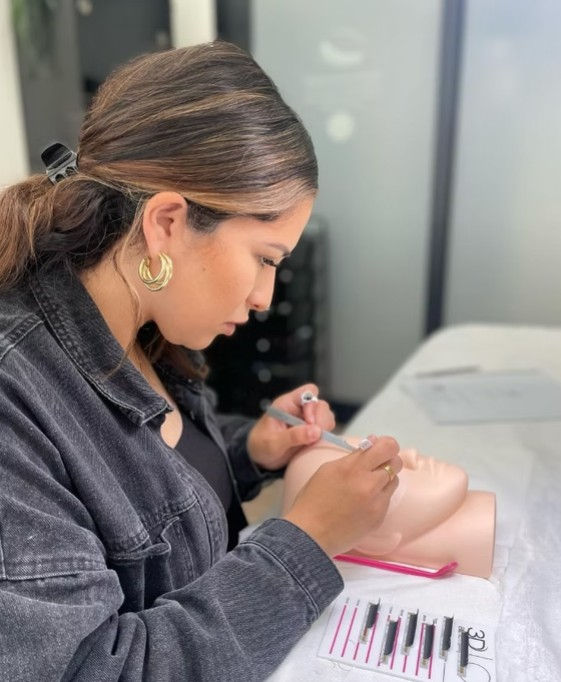
Students who train hands-on tend to launch and earn faster. Here’s why:
Real Practice = Real Confidence
When you’ve already worked on different lash lines, adhesive conditions, and real personalities, you’re not guessing — you’re performing from experience.
You Learn What Clients Actually Want
Not every client wants a dramatic look. Not every client wants natural. Hands-on training exposes you to real preferences, so you learn how to:
Recommend styles
Educate about lash health
Manage expectations
Upsell upgrades responsibly
This is how returning clients are built.
You Stand Out in a Competitive Market
Anyone can get certified. Not everyone can work confidently on real clients right away. Hands-on trained artists stand out because they:
Make fewer errors
Communicate more confidently
Deliver safer and cleaner work
Build client trust faster
And client trust = bookings.
Signs of a Quality Hands-On Lash Training Program

Not all programs are the same. Here’s what to look for:
✔ Live Model or Client Practice
You should apply on real people before graduating.
✔ Small Class Sizes
Instructors should watch your posture, grip, adhesive, mapping, and isolation — which isn’t possible in large groups.
✔ Experienced Instructors
Look for real industry experience, not just certification.
✔ Curriculum That Blends Theory + Practice
A balanced course includes both, not one or the other.
✔ Feedback and Correction
You need guidance during the application process, not just at the end.
✔ Portfolio Support
Good schools help you take quality before-and-after photos.
✔ Business or Client Training
Soft skills matter just as much as technical ones.
✔ Aftercare and Retention Education
Retention issues are the most common complaints — proper training prevents them.
✔ Post-Course Support
Mentorship or refresher options help students succeed.
If a program offers all these — it’s built for the real world, not just for the certificate.
From Student to Lash Artist: What the Journey Really Looks Like

Here’s a realistic breakdown of how students develop through hands-on learning:
Week 1–2: Foundations
Learn lash anatomy, health, adhesives, mapping, sanitation
Practice on mannequins to develop hand control
Begin isolation drills
Week 3–6: First Real-Client Sessions
Apply supervised sets on live models
Work through adhesive control
Practice full sets and refills
Learn speed and workflow habits
Fix retention and direction issues
Month 2–3: Portfolio Building
Photograph before/after sets
Identify strengths (classic, hybrid, etc.)
Develop personal style preferences
Learn client communication
Month 4 and Beyond: Business & Brand
Build booking profiles
Create pricing structure
Manage returning clients
Refine retention knowledge
Begin referrals and word-of-mouth growth
This is what real training looks like — not just reading a chapter and taking a quiz.
The Beauty Industry Rewards Skill, Not Just Certificates

One hard truth: clients don’t ask where you studied — they care about the work you deliver.
Your certificate gets you into the industry.Your skills keep you in it.
Hands-on training transforms your capabilities so you can:
Charge fairly
Retain clients
Get referrals
Build a reliable income
The beauty industry is thriving, but it’s the artists who practice, improve, and invest in skill-building who earn the most.
Final Thoughts: Learn by Doing, Not Just Studying
If you’re serious about becoming a lash artist, invest in training that gives you real time with real clients. You deserve more than a certificate — you deserve confidence, clarity, and the ability to start working immediately.
Hands-on training doesn’t just teach you how to apply lashes. It teaches you how to:
Take care of the client in your chair
Handle challenges calmly
Deliver consistent work
Keep clients returning again and again
That’s what a real career looks like.
Ready to Train Like a Real Lash Artist?
If you want hands-on lash training that prepares you for real clients, supervised applications, industry-level standards, and post-training support, check out South Bay Lash Academy.
They offer:
✔ Live model practice
✔ Real-world techniques
✔ Sanitation & safety standards
✔ Business mindset guidance
✔ Certified instructors
✔ Portfolio building opportunities
✔ Post-course mentorship
Visit their official website here:👉 https://www.southbaylashacademy.com/


Comments